

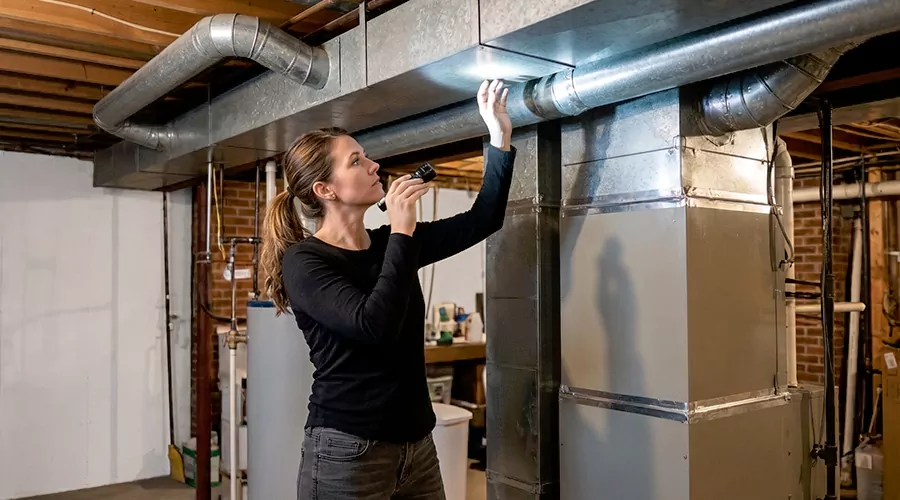
Residential HVAC ductwork should generally be inspected for cleanliness about every two years under NADCA's recommended schedule, while air-handling equipment should receive a cleanliness inspection annually. More frequent inspection may be appropriate after renovations, water damage, pest activity, or persistent airflow problems. However, inspection does not mean the ducts automatically need cleaning.
Heating and cooling ducts carry conditioned air throughout a home. Over time, duct connections can loosen, flexible sections may become damaged, and dust or other material can accumulate in accessible passages.
Many homeowners do not think about their ductwork until one room becomes uncomfortable or an unusual odor develops. Unfortunately, large sections of the distribution network are often hidden inside walls, ceilings, attics, and crawlspaces. Searching for air duct cleaning near me can help homeowners find local professionals who inspect accessible ductwork and remove accumulated dust and debris when cleaning is needed.
Periodic inspections can identify developing problems before they lead to significant energy loss, moisture damage, or poor heating and cooling performance.
What Is the Recommended HVAC Duct Inspection Frequency?
The National Air Duct Cleaners Association (NADCA) publishes recommended cleanliness inspection intervals in its ACR Standard.
For residential buildings, it recommends annual inspection of air-handling units and inspections of supply and return ducts every two years.
| HVAC Component or Situation | Recommended Inspection Timing |
|---|---|
| Air-handling unit cleanliness | Every year |
| Residential supply duct cleanliness | Every two years |
| Residential return duct cleanliness | Every two years |
| After major renovation | Inspect before returning affected ducts to regular service |
| Following water damage | Inspect promptly |
| After evidence of pest activity | Inspect promptly |
| Persistent airflow or odor problem | Inspect when symptoms develop |
| After duct cleaning | Verify completed work |
These are professional recommendations, not a universal legal requirement for homeowners.
The Environmental Protection Agency (EPA) also distinguishes routine HVAC maintenance from duct cleaning. It does not recommend cleaning residential ducts simply because a certain amount of time has passed.
Why Is Regular Ductwork Inspection Important?
A duct inspection helps identify conditions that may otherwise remain concealed. ENERGY STAR reports that typical residential duct systems can lose approximately 20% to 30% of moving air through leaks, holes, and poor connections. Leaks can reduce the amount of conditioned air reaching occupied rooms. Return-side openings may also draw unwanted air from unconditioned spaces.
An inspection may identify damaged connections, moisture problems, substantial debris, or insulation defects. Not every inspection results in repair. The purpose is to establish the system's actual condition.
What Do HVAC Technicians Check During an Inspection?
A professional inspection can include several parts of the air distribution system.
| Component | What the Technician Looks For |
|---|---|
| Supply ducts | Loose joints, damage, deposits, and restrictions |
| Return ducts | Leaks, gaps, and contamination |
| Flexible ducts | Compression, tears, and inadequate support |
| Duct insulation | Missing, damaged, or wet material |
| Registers and boots | Loose fittings and air leakage |
| Air handler | Filter bypass and visible contamination |
| Cooling coil area | Debris and moisture-related problems |
| Condensate drain | Blockage or improper drainage |
| Dampers | Damaged or incorrect positions |
| Accessible duct interiors | Significant visible dust or debris |
The scope depends on why the inspection was requested.
A cleanliness inspection is not automatically a complete performance evaluation. Leakage testing, airflow measurements, and static pressure testing may be quoted separately.
1. Inspect Ductwork After Home Renovations
Remodeling can introduce construction dust, drywall particles, and debris into unprotected HVAC openings. Workers may also disturb duct connections while modifying framing or installing new equipment. NADCA recommends inspecting HVAC components involved in construction, renovation, or remodeling before they return to regular operation.
Ask the contractor to check affected branches, registers, and the air handler. Significant construction debris may need removal, but ordinary inspection findings do not automatically justify whole-house cleaning.
2. Inspect Ducts After Water Damage
Water can enter ducts through roof leaks, plumbing failures, condensation, or damaged HVAC drainage. Wet insulation may retain moisture and contribute to deterioration. The EPA advises that wet or moldy fiberglass duct insulation cannot be effectively cleaned and should be replaced.
If water has entered the duct network, arrange inspection promptly and correct the moisture source. Cleaning alone will not prevent future contamination if the leak remains active.
3. Inspect Ductwork When Airflow Becomes Weak
Weak airflow can result from crushed flexible ductwork, disconnected branches, closed dampers, or undersized passages. If one room suddenly receives very little conditioned air, an inspection can help identify the affected branch.
When several rooms experience weak airflow, the technician may also need to evaluate filters, coils, blower operation, and duct sizing. A visual inspection may reveal obvious problems, but professional airflow measurements can be necessary for diagnosis.
4. Inspect Air Ducts When Unusual Odors Develop
Persistent musty or unexplained odors deserve investigation. Potential sources include moisture-damaged insulation, contaminated HVAC components, or air entering through return duct leaks. An odor alone does not prove that mold is present.
The EPA recommends appropriate assessment of suspected biological contamination and correction of the underlying moisture problem. A contractor should show evidence supporting any proposed cleaning or remediation.
5. Inspect Ducts After Pest Activity
Rodents and insects can enter damaged ductwork or surrounding building cavities. Signs may include nesting material, unusual odors, or visible debris around accessible openings. The EPA identifies vermin infestation as a condition that can justify professional duct cleaning.
However, the pest entry point must also be located and corrected. Inspection may reveal torn flexible ducts or disconnected joints that require replacement or repair.
Can Homeowners Inspect Their Own Air Ducts?
Homeowners can perform limited visual checks without specialized equipment. Remove nearby obstructions from accessible vents and examine the visible opening using a flashlight.
Look for damaged register covers, excessive debris near return grilles, water staining, and obvious duct damage in safely accessible areas. Professional air duct leak repair can address gaps, loose connections, and damaged duct sections identified during an inspection to help reduce air loss and improve airflow.
Do not enter unsafe attics or crawlspaces, remove electrical panels, or disturb suspected asbestos-containing materials. Hidden ducts require appropriate professional access and inspection methods.
What Is the Difference Between Inspection and Cleaning?
Inspection assesses whether the duct system has problems. Cleaning physically removes accumulated contamination from selected components using suitable equipment.
A company should not recommend cleaning merely because an inspection was performed.
The EPA advises considering professional cleaning when substantial visible mold is present on appropriate hard surfaces, ducts contain vermin, or excessive debris is entering occupied rooms.
A light layer of ordinary dust is not necessarily evidence that cleaning is needed.
Is a Camera Inspection Necessary Every Two Years?
No. NADCA's recommended inspection schedule does not mean every home requires a full video camera examination at each interval. Some components can be assessed visually through accessible openings.
Camera equipment becomes more useful when the suspected problem is concealed or when photographs are needed to document difficult-to-reach sections. A contractor should explain why camera inspection is appropriate and which duct sections can actually be examined.
How Much Does a Ductwork Inspection Cost?
The price depends on whether the contractor performs a basic visual assessment, camera examination, duct leakage test, or complete airflow evaluation. Some HVAC maintenance visits include limited duct observations. Specialized testing may involve additional charges.
Ask for a written estimate identifying the components inspected, diagnostic equipment used, and documentation provided. A quote for a visual inspection should not be confused with one covering full-system performance testing.
How Can You Keep Ductwork in Good Condition?
Regular maintenance can reduce preventable problems between inspections. Replace HVAC filters according to the manufacturer's instructions. Keep registers and return grilles unobstructed. Repair water leaks promptly and avoid storing heavy objects on exposed flexible ducts.
Protect duct openings during remodeling and have damaged connections repaired using appropriate materials. Record the date and findings of each inspection to help track recurring issues.
Conclusion
NADCA recommends residential supply and return duct cleanliness inspections every two years and annual inspection of air-handling equipment. Additional inspections are appropriate after renovations, moisture intrusion, pest activity, and persistent HVAC performance problems. Inspection helps identify damage and contamination but does not automatically mean cleaning is necessary. A qualified contractor can determine whether the system needs repairs, cleaning, or further airflow testing.